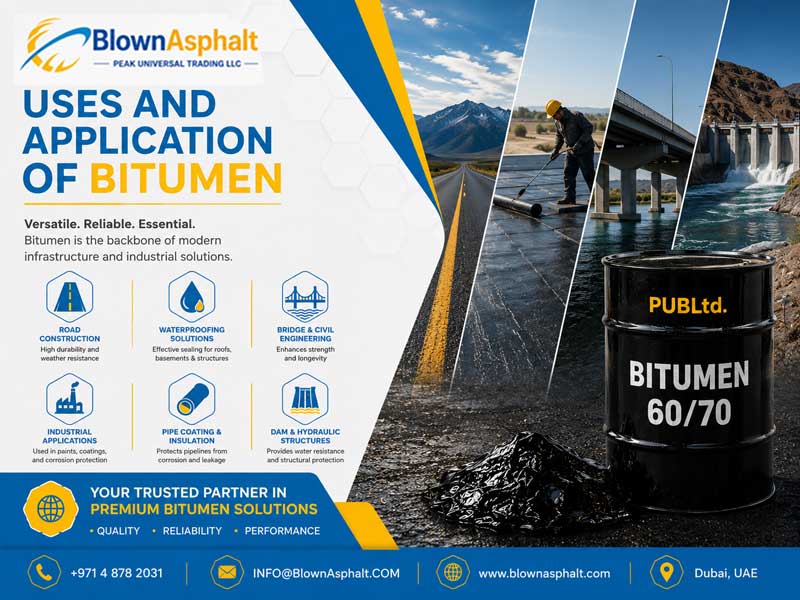
Uses and Application of Bitumen

Bitumen Application and Uses: It is no surprise that most of our roads and streets are made of asphalt. Asphalt roads are more flexible to build and easier to maintain than roads using any other material. They are more cost-effective in both construction and maintenance and help reduce noise pollution.

Uses and Applications of Bitumen

Bitumen is one of the most essential materials in modern construction and industrial development. Thanks to its strong binding capability, excellent waterproofing performance, and long-term durability, bitumen supports a wide range of infrastructure projects worldwide. From highways and airports to roofing systems and industrial coatings, bitumen remains a reliable and cost-effective solution.

This article explores the primary uses and applications of bitumen, explains its advantages, and highlights why it continues to be a preferred material across multiple industries.

What Is Bitumen?

Bitumen is a viscous, black or dark brown petroleum-based material obtained during crude oil refining. It softens when heated and hardens when cooled, which makes it ideal for binding and sealing applications.

Additionally, bitumen resists water penetration, chemical exposure, and weathering. Because of these properties, industries widely use it in construction, waterproofing, and protective systems.

Bitumen is available in several forms, including:

  • Penetration grade bitumen

  • Oxidized (blown) bitumen

  • Cutback bitumen

  • Bitumen emulsion

Each type serves specific technical and environmental requirements.

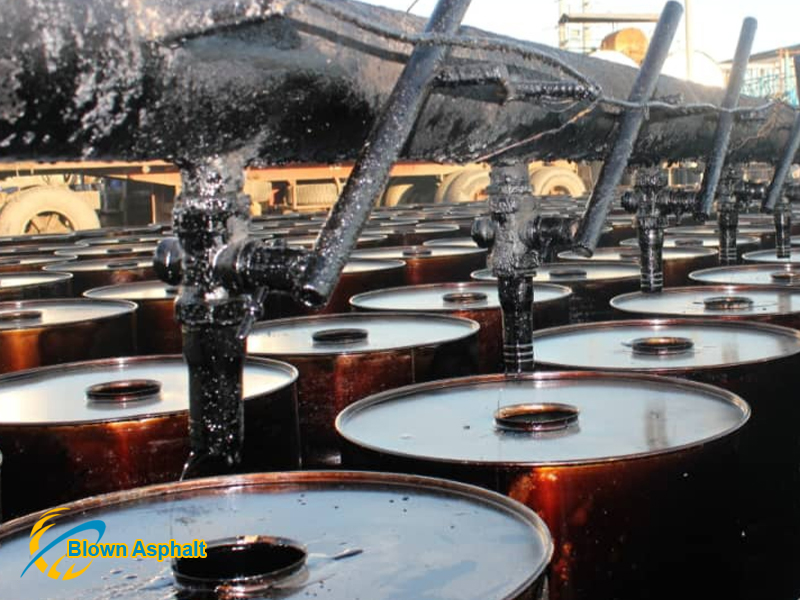
Applications of Bitumen 60/70, Blown Asphalt Production Process, Asphalt road surfaces,

Major Uses and Applications of Bitumen

1. Road Construction and Asphalt Pavements

Road construction represents the largest application of bitumen globally. In asphalt mixtures, bitumen acts as a binder that holds aggregates together and provides flexibility.

Bitumen is widely used for:

  • Highways and expressways

  • Urban and rural roads

  • Airport runways and taxiways

  • Parking areas and service roads

Moreover, bitumen asphalt surfaces can withstand heavy traffic and temperature fluctuations. Therefore, they reduce cracking and extend pavement life.

2. Roofing Systems and Waterproofing Membranes

Bitumen plays a critical role in roofing and waterproofing applications. Because it repels water effectively, it forms a strong protective barrier against moisture intrusion.

Common roofing uses include:

  • Bituminous roofing sheets

  • Built-up roofing (BUR) systems

  • Modified bitumen membranes

  • Flat and low-slope roofing

Consequently, bitumen roofing systems improve building protection and reduce maintenance costs.

3. Foundation and Structural Waterproofing

Bitumen is extensively used to protect underground and structural elements from water damage. It prevents moisture penetration that can weaken concrete and steel over time.

Typical applications include:

  • Basement waterproofing

  • Foundation coatings

  • Retaining walls

  • Bridge decks

  • Tunnels and substructures

As a result, bitumen enhances structural durability and long-term safety.

4. Industrial Coatings and Corrosion Protection

In industrial environments, bitumen-based coatings protect surfaces from corrosion, chemicals, and moisture.

Industries apply bitumen coatings to:

  • Pipelines and pipe joints

  • Storage tanks

  • Steel structures

  • Marine and offshore facilities

Furthermore, these coatings extend equipment life and reduce repair costs.

5. Bitumen in Insulation and Soundproofing

Bitumen contributes to thermal and acoustic insulation systems. It helps control temperature and reduces sound transmission.

Key applications include:

  • Roofing insulation layers

  • Sound-dampening sheets

  • Industrial insulation boards

Therefore, bitumen improves energy efficiency and indoor comfort.

6. Automotive Industry Applications

The automotive industry uses bitumen-based materials for noise control and corrosion protection.

Common uses include:

  • Underbody coatings

  • Vibration damping materials

  • Anti-corrosion layers

Thus, bitumen enhances vehicle durability and passenger comfort.

7. Marine and Hydraulic Structures

Bitumen performs exceptionally well in marine environments where water resistance is essential.

Applications include:

  • Port and harbor construction

  • Canal linings

  • Dams and reservoirs

  • Offshore platforms

Because bitumen resists saltwater and moisture, it ensures long-lasting performance in harsh conditions.

8. Crack Sealing and Expansion Joints

Bitumen is widely used for sealing cracks and joints in pavements and structures. Its flexibility allows it to expand and contract with temperature changes.

Typical uses include:

  • Road crack sealing

  • Expansion joints

  • Pavement maintenance

As a result, bitumen prevents water ingress and extends pavement life.

Applications of Bitumen 60/70, Penetration Asphalt, Blown Asphalt Production Process, How to Produce Oxidized Bitumen? Industrial Bitumen Uses,

Environmental and Economic Advantages of Bitumen

Bitumen offers several environmental and economic benefits when used responsibly.

Key advantages include:

  • Recyclability of asphalt pavements

  • Reduced construction waste

  • Lower lifecycle costs

  • Energy-efficient application methods

Moreover, modern technologies continue to improve bitumen’s sustainability profile.

Choosing the Right Bitumen Grade

Selecting the correct bitumen grade depends on:

  • Climate conditions

  • Traffic load

  • Application type

  • Industry standards

For example, penetration grade bitumen suits road construction, while oxidized bitumen works best for roofing and industrial applications.

✅ FAQ Section

What is bitumen mainly used for?

Bitumen is mainly used in road construction, roofing systems, waterproofing applications, and industrial coatings due to its strong binding and water-resistant properties.

Why is bitumen important in road construction?

Bitumen provides flexibility, durability, and strong adhesion to aggregates, which helps roads withstand heavy traffic and temperature changes.

What industries use bitumen besides construction?

In addition to construction, industries such as automotive, marine, manufacturing, and energy use bitumen for insulation, corrosion protection, and sealing applications.

Is bitumen waterproof?

Yes, bitumen is highly waterproof. Therefore, it is widely used in roofing membranes, foundations, basements, and underground structures.

What are the different types of bitumen used in applications?

Common types include penetration grade bitumen, oxidized (blown) bitumen, cutback bitumen, and bitumen emulsions, each designed for specific uses.

Looking for High-Quality Bitumen Solutions?

PEAK UNIVERSAL TRADING LLC supplies premium-grade bitumen products tailored for road construction, waterproofing, roofing, and industrial applications. Our materials meet international standards and deliver consistent performance across global projects.

📞 Phone: +971 4 878 2031
📧 Email: [email protected]
📦 P.O. Box: 417261

👉 Contact PEAK UNIVERSAL TRADING LLC today to request technical specifications, pricing, or bulk supply solutions for your next project.