Blown Bitumen Vs Regular Bitumen: Setting the Stage
Delving into the world of bitumen, it is crucial to understand the distinct characteristics of blown bitumen vs regular bitumen. This guide aims to shed light on their unique properties, applications, and cost implications, providing a comprehensive overview to aid in making an informed decision tailored to specific needs and environmental conditions.
Understanding the Core Differences: Blown Bitumen vs Regular Bitumen
Blown bitumen and regular bitumen are two distinct types of bituminous materials used extensively in various industrial applications, particularly in road construction, roofing, and waterproofing. Understanding the core differences between these two materials is crucial for manufacturers, suppliers, and end-users to make informed decisions based on their specific requirements.
Production Process: Oxidized Bitumen Vs Regular Bitumen
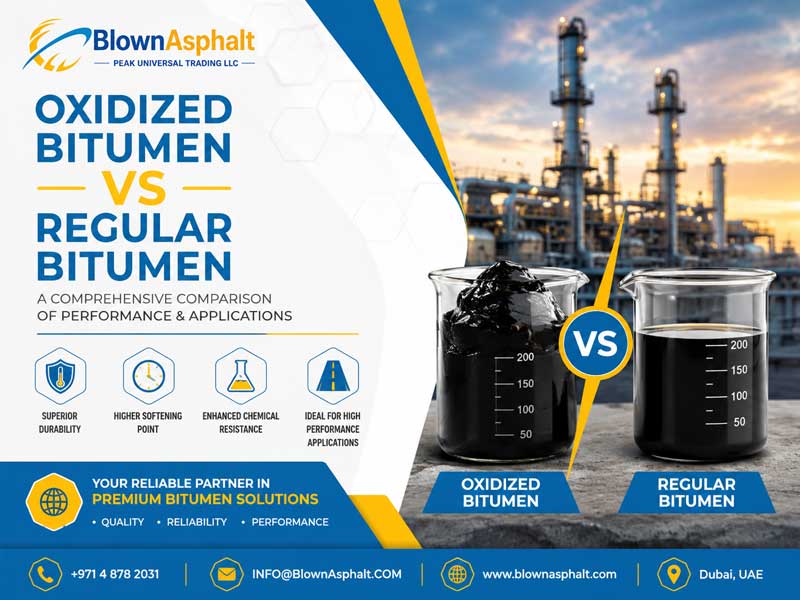
The primary distinction between blown asphalt and regular bitumen lies in their production processes.
Regular bitumen, also known as straight-run bitumen, is obtained directly from the distillation of crude oil. It retains the properties of the original crude oil to a significant extent.
On the other hand, blown bitumen is produced by blowing air through straight-run bitumen at high temperatures. This process alters the bitumen’s properties, making it more resistant to temperature variations and aging.
Physical Properties: Oxidized Bitumen Vs Regular Bitumen
Blown bitumen has a higher softening point and lower penetration value compared to regular bitumen. This means that blown bitumen is harder and more brittle in cold temperatures, but it performs better in hot conditions.
Regular bitumen, with its lower softening point and higher penetration value, is softer and more flexible, making it suitable for applications that require better workability.
Durability and Aging: Oxidized Bitumen Vs Regular Bitumen
The oxidative aging process in blown bitumen results in a material that is more resistant to weathering and aging effects. It has enhanced durability and a longer lifespan compared to regular bitumen. However, this also means that blown bitumen is less flexible and more susceptible to cracking under thermal stress or load fatigue.
Applications: Oxidized Bitumen Vs Regular Bitumen
Due to its enhanced temperature stability and resistance to aging, blown asphalt is commonly used in applications that require a robust and durable material, such as industrial roofing, waterproofing membranes, and certain types of road construction. Regular bitumen, with its greater flexibility, is preferred for applications where workability is a key consideration, such as in the production of asphalt for road paving.
By understanding these core differences, stakeholders in the bitumen industry can make more informed choices, selecting the type of bitumen that best suits their specific needs and application requirements.



Leave a Reply
Want to join the discussion?Feel free to contribute!