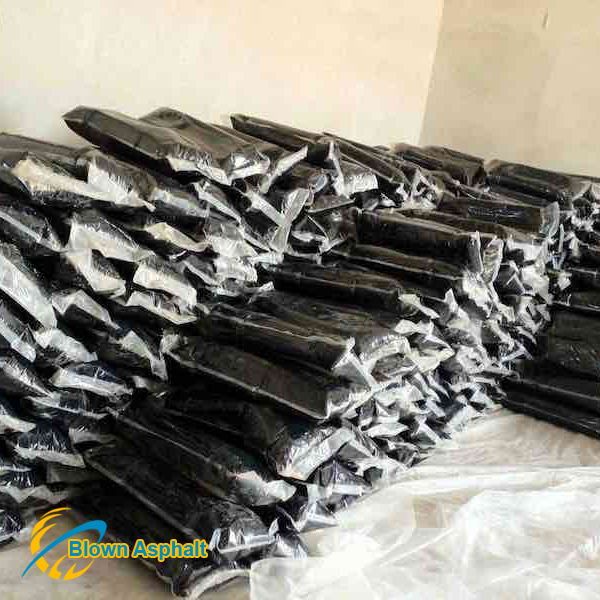
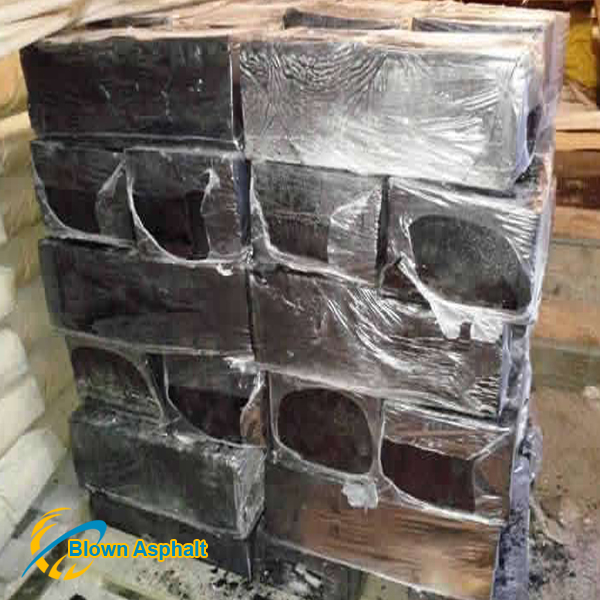
Read more about Production of Oxidized bitumen 150/5 or Blown asphalt 150/5
Technical Advantages of Blown asphalt 150/5
- Durability
- Flexibility
- Water Resistant
- Chemical Stability
Compared to paving grade bitumen:
- Reduced temperature susceptibility
- Exhibits a more ‘solid’ nature at ambient temperatures
- High penetration index
Uses of Oxidized Bitumen 150/5
Blown asphalt 150/5 is widely used as an anti-slip layer compound in the piling industry, for the manufacture of roofing felts, for sound dampening felts and under carriage sealant in the automobile industry, electric cable joint protection, joint filling compound, sealant compound and many others.
It’s using as raw material for Bitumen coat, roofing, insulation also in Isolation bitumen membrane sheet.
Also Oxidized Bitumen 150/5 uses in chemical, fuel, paints, lacquers, varnishes, paper-pulp-board, textile processing. In road construction, pavement, crack seal and repairmen, civil works, roofing also construction.
In addition, it uses for sealing and insulating buildings, adhesive, construction materials additive, dust-binding, coating. With the wide range uses in the insulating and impregnating agent, make rubber and plastic products.
The Bitumen 150/5 products are for paving, roofing. Also used in asphalt-based paints for corrosion protection of metals, inlining public works structures, adhesives in electrical laminates, base for synthetic turf.
Typical uses for Blown asphalt 150/5 also include roofing, pipe coating, Portland cement pavement, hydraulic applications, paint manufacturing.
Storage & Handling
Heating of packaged bitumen is a critical phase in most of the final uses. Typically, the packaged material is heated and melted in boilers out on site.
However, control at the heating phase is very important in terms of health and safety as well as in maintaining the quality of the product.
Note must be taken of the maximum safe handling temperature of 230 C and this should not be abused. Bitumen is a poor conductor of heat, consequently, control of the heating phase is of paramount importance.
The Blown asphalt 150/5 material should be broken up prior to placement in the boiler. This exposes a larger surface area to the heat and encourages a more even heating regime.
Without the larger exposed surface area, aggressive heating at the base and sides of the boiler may well result in localized overheating, altering the characteristics of the PUBLtd modified bitumen and potentially causing thermal cracking of the bitumen, creating the release of low lash vapors.
The flash point of the oxidized bitumen then becomes irrelevant; as these low flash vapors determine the fire risk.
Melted bitumen should not be left in the boiler and reheated from cold, as there is then a high potential for localized overheating around the heating area (lack of convection means poor heat transfer) and potential development of a pressurized pocket of low flash vapors.
Be aware of the placement of any temperature monitoring or control devices. As a result of the poor thermal conductivity of the bitumen, a thermometer in the bitumen some distance from the heat source could read significantly different (even hundreds of degrees) from the true temperature of the bitumen near the heat source.
For Health and Safety information, please make reference to the relevant MSDS.