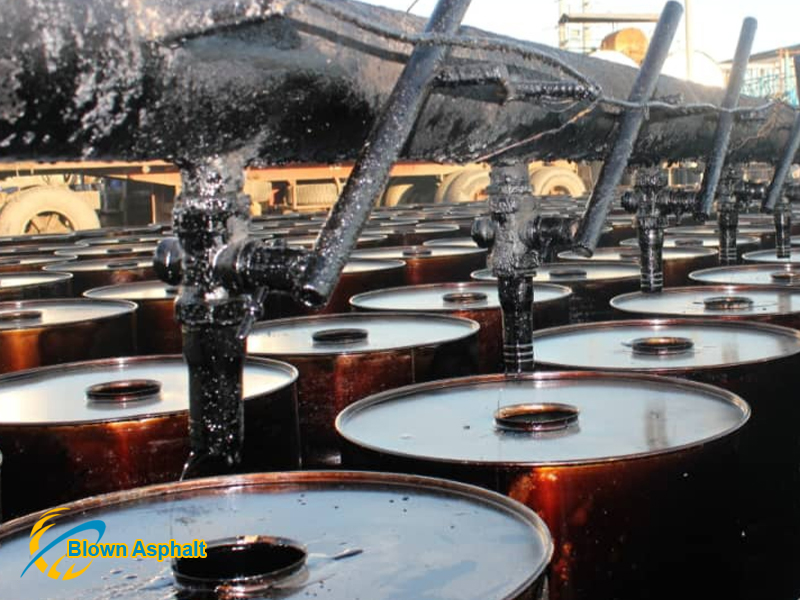
Bitumen Vs Blown Bitumen

Delving into the world of bitumen, it is crucial to understand the distinct characteristics of blown bitumen vs regular bitumen. This introductory analysis sets the stage for a comprehensive exploration, providing readers with the necessary background to navigate the complexities of these two materials, their applications, and their impact on project costs and performance.

Blown Bitumen Vs Regular Bitumen: Setting the Stage

Delving into the world of bitumen, it is crucial to understand the distinct characteristics of blown bitumen vs regular bitumen. This guide aims to shed light on their unique properties, applications, and cost implications, providing a comprehensive overview to aid in making an informed decision tailored to specific needs and environmental conditions.

Understanding the Core Differences: Blown Bitumen vs Regular Bitumen

Blown bitumen and regular bitumen are two distinct types of bituminous materials used extensively in various industrial applications, particularly in road construction, roofing, and waterproofing. Understanding the core differences between these two materials is crucial for manufacturers, suppliers, and end-users to make informed decisions based on their specific requirements.

Production Process: Oxidized Bitumen Vs Regular Bitumen

The primary distinction between blown asphalt and regular bitumen lies in their production processes.

Regular bitumen, also known as straight-run bitumen, is obtained directly from the distillation of crude oil. It retains the properties of the original crude oil to a significant extent.

On the other hand, blown bitumen is produced by blowing air through straight-run bitumen at high temperatures. This process alters the bitumen’s properties, making it more resistant to temperature variations and aging.

Physical Properties: Oxidized Bitumen Vs Regular Bitumen

Blown bitumen has a higher softening point and lower penetration value compared to regular bitumen. This means that blown bitumen is harder and more brittle in cold temperatures, but it performs better in hot conditions.

Regular bitumen, with its lower softening point and higher penetration value, is softer and more flexible, making it suitable for applications that require better workability.

Durability and Aging: Oxidized Bitumen Vs Regular Bitumen

The oxidative aging process in blown bitumen results in a material that is more resistant to weathering and aging effects. It has enhanced durability and a longer lifespan compared to regular bitumen. However, this also means that blown bitumen is less flexible and more susceptible to cracking under thermal stress or load fatigue.

Applications: Oxidized Bitumen Vs Regular Bitumen

Due to its enhanced temperature stability and resistance to aging, blown asphalt is commonly used in applications that require a robust and durable material, such as industrial roofing, waterproofing membranes, and certain types of road construction. Regular bitumen, with its greater flexibility, is preferred for applications where workability is a key consideration, such as in the production of asphalt for road paving.

By understanding these core differences, stakeholders in the bitumen industry can make more informed choices, selecting the type of bitumen that best suits their specific needs and application requirements.

Applications of Bitumen 60/70, Blown Asphalt Production Process, Asphalt road surfaces,

Production Processes: Cost Implications of Blown and Regular Bitumen

The production processes of blown bitumen and regular bitumen not only result in different material properties but also have significant implications on the overall cost of the final product. Analyzing these cost factors is essential for businesses and end-users to make economical and efficient choices.

Raw Material and Energy Consumption

  • Regular Bitumen: The production of regular bitumen, also known as straight-run bitumen, involves the distillation of crude oil. This process requires a substantial amount of energy but utilizes the heavier fractions of crude oil, which are generally less expensive. The cost-effectiveness of regular bitumen production is highly dependent on crude oil prices.
  • Blown Bitumen: The production of blown bitumen involves additional steps compared to regular bitumen. After the initial distillation, air is blown through the bitumen at high temperatures. This process requires additional energy and results in a yield loss, as some of the material is oxidized and becomes unusable. These factors contribute to the higher production costs of blown bitumen.

Equipment and Maintenance

  • Regular Bitumen: The equipment required for producing regular bitumen is generally less complex, resulting in lower capital investment and maintenance costs.
  • Blown Asphalt: The production of blown bitumen requires specialized equipment to handle the air-blowing process, leading to higher capital costs and potentially higher maintenance expenses due to the more complex nature of the operation.

Transportation and Storage

  • Regular Bitumen: Due to its softer nature and lower softening point, regular bitumen may require heated transportation and storage, which can increase logistical costs.
  • Blown Asphalt: Blown bitumen’s higher softening point means it can be transported and stored at lower temperatures, potentially resulting in cost savings in these areas.

Application Costs

  • Regular Bitumen: Its softer nature and greater workability can lead to lower application costs, especially in road construction and other large-scale projects.
  • Blown Asphalt: While its robust nature is beneficial for certain applications, it can be more difficult to work with, potentially leading to higher labor and equipment costs during application.

Long-Term Value

  • Regular Bitumen: While the initial costs may be lower, the shorter lifespan and potential for more frequent repairs or replacements can result in higher long-term costs.
  • Blown Asphalt: The higher initial investment may be offset by its longer lifespan and reduced maintenance requirements, providing better long-term value for certain applications.

By carefully considering these cost implications, businesses and end-users can make more informed decisions about which type of bitumen is the most cost-effective for their specific needs, taking into account both short-term and long-term factors.

Applications of Bitumen 60/70, Penetration Asphalt, Blown Asphalt Production Process, How to Produce Oxidized Bitumen? Industrial Bitumen Uses,

Material Properties: How Blown Asphalt Stands Out from Regular Bitumen

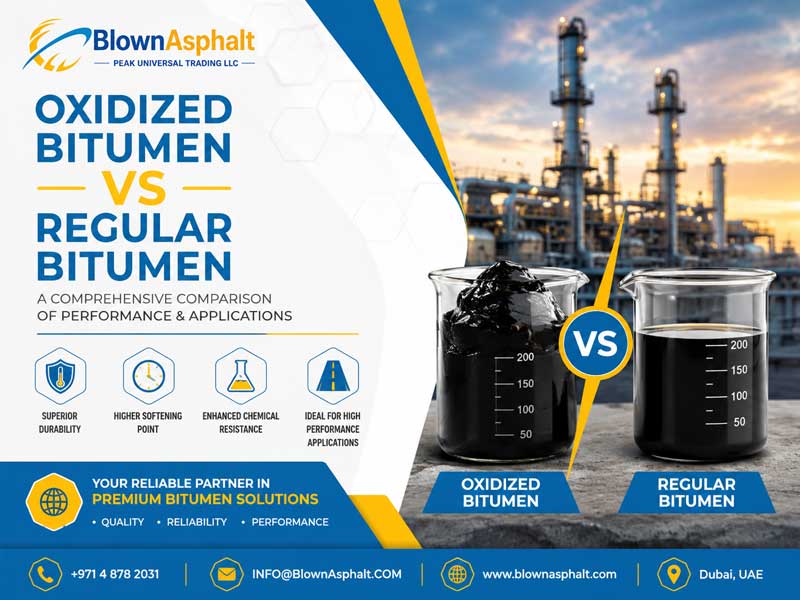
Oxidized Bitumen Vs Regular Bitumen

Oxidized bitumen and regular bitumen, while both derived from crude oil, have distinct material properties that set them apart. Understanding these differences is crucial for industries that rely on these materials for various applications, from road construction to roofing.

Softening Point and Penetration

  • Oxidized bitumen: Characterized by a higher softening point, blown asphalt stands out for its ability to remain stable under higher temperatures. This makes it less prone to softening and flowing in hot weather, a crucial property for roofing and other applications exposed to high temperatures. Its lower penetration value indicates a harder, more brittle consistency, which contributes to its durability but can also make it more challenging to work with.
  • Regular Bitumen: With a lower softening point, regular bitumen is softer and more flexible, making it ideal for road construction where a certain degree of flexibility is required to accommodate traffic loads and temperature fluctuations. The higher penetration value means it is more easily workable, an important factor in its widespread use in asphalt production.

Viscosity and Workability

  • Oxidized bitumen: The process of blowing air through the bitumen increases the material’s viscosity, resulting in a thicker, more viscous product. While this enhances its waterproofing and adhesive properties, it also means that blown asphalt requires higher temperatures to be workable, potentially increasing application costs.
  • Regular Bitumen: Lower viscosity means that regular bitumen is more fluid and easier to work with at lower temperatures. This is a significant advantage in road construction and other large-scale applications where ease of application is a priority.

Durability and Aging Resistance

  • Oxidized bitumen: The oxidative process that transforms straight-run bitumen into blown asphalt also enhances its resistance to aging and weathering. This results in a longer lifespan and reduced maintenance requirements, making it a preferred choice for applications where long-term durability is a key consideration.
  • Regular Bitumen: While still a durable material, regular bitumen is more susceptible to aging and weathering effects, which can lead to a shorter lifespan and higher maintenance costs over time.

Temperature Stability

  • Oxidized bitumen: Its enhanced temperature stability means that blown asphalt performs well under a wide range of temperatures, maintaining its integrity in both hot and cold weather.
  • Regular Bitumen: While it performs excellently in moderate temperatures, regular bitumen can become soft and flow in hot weather, and brittle in cold conditions, potentially leading to performance issues in extreme climates.

Waterproofing and Adhesive Properties

  • Oxidized bitumen: The increased viscosity and altered chemical structure of blown asphalt enhance its waterproofing and adhesive properties, making it an excellent choice for roofing, waterproofing membranes, and other applications where these properties are paramount.
  • Regular Bitumen: While it still possesses good waterproofing and adhesive properties, regular bitumen may not perform as well as blown asphalt in applications where these properties are critical.

In summary, Oxidized bitumen stands out from Regular bitumen due to its higher softening point, increased viscosity, enhanced durability, and superior temperature stability. These properties make it a preferred choice for specific applications, particularly where long-term performance and resistance to extreme conditions are required. However, its higher cost and more challenging workability mean that careful consideration is needed to determine the most cost-effective and practical solution for each specific use case.

Application Variations: Where Oxidized bitumen Outperforms Regular Bitumen

Oxidized Bitumen Vs Regular Bitumen

Oxidized bitumen and regular bitumen, due to their distinct material properties, find their niches in different applications. Understanding where blown bitumen outperforms regular bitumen can guide industries in making the right material choices for their specific needs.

Roofing and Waterproofing

  • Oxidized bitumen: Its higher softening point and increased viscosity make blown bitumen an excellent choice for roofing materials and waterproofing membranes. It provides a robust and durable layer that resists temperature variations and aging, ensuring a longer lifespan and reduced maintenance requirements. Its superior adhesive properties also ensure a secure and watertight seal.
  • Regular Bitumen: While it can also be used in roofing and waterproofing, regular bitumen may not offer the same level of performance and durability, especially in regions with extreme temperature fluctuations.

Industrial Coatings and Sealants

  • Oxidized bitumen: The oxidative process that blown bitumen undergoes results in a material with enhanced chemical resistance, making it suitable for industrial coatings and sealants. It provides a protective layer that resists chemicals, water, and weathering, helping to prolong the lifespan of the underlying material.
  • Regular Bitumen: May not provide the same level of chemical resistance and durability, making it less suitable for industrial applications where these properties are critical.

Pipe Coatings

  • Oxidized bitumen: Its robust nature and resistance to aging make blown bitumen a preferred choice for pipe coatings, especially for pipes that are exposed to harsh environmental conditions. It helps to protect the pipes from corrosion, extending their lifespan and reducing the need for frequent replacements.
  • Regular Bitumen: While it can be used for pipe coatings, it may not offer the same level of protection and durability as blown bitumen.

Adhesives

  • Oxidized bitumen: The increased viscosity and adhesive properties of blown bitumen make it an excellent choice for use as an adhesive in various industrial applications. It provides a strong and durable bond, ensuring the longevity of the adhesive joint.
  • Regular Bitumen: May not provide as strong or durable a bond, making it less suitable for applications where adhesive strength is a key consideration.

Soundproofing and Vibration Damping

  • Oxidized bitumen: Its denser and more viscous nature makes blown bitumen effective for soundproofing and vibration damping applications. It helps to reduce noise transmission and dampen vibrations, contributing to a quieter and more comfortable environment.
  • Regular Bitumen: While it can also be used for these applications, it may not provide the same level of performance as blown bitumen.

In summary, Oxidized bitumen outperforms Regular bitumen in applications that require robustness, durability, and resistance to extreme conditions. Its superior adhesive, waterproofing, and protective properties make it the material of choice for roofing, industrial coatings, pipe coatings, adhesives, and soundproofing applications.

However, its higher cost and more challenging workability mean that careful consideration is needed to determine the most cost-effective and practical solution for each specific use case.